

?

Bienvenue sur une fiche “article documentaire”
Cette page présente un contenu structuré, pensé pour t’apporter une vraie plus-value à la lecture.
Faisons le tour ensemble !

Ici s’affiche le sujet traité dans l’article.
Il joue le rôle de titre principal, clair, orienté “bénéfice utilisateur”.
➜ L’objectif est que tu saches immédiatement si cet article répond à ton besoin.

Cette zone indique qui est à l’origine de l’article.
Cela permet de contextualiser le contenu : qui parle, d’où, avec quelle expérience ?

Ici sont listées les catégories documentaires associées à l’article.
➜ Elles t’aident à comprendre dans quel contexte s’inscrit le contenu, et à retrouver d’autres ressources liées.

Ce badge indique le niveau de maturité de l’article.
➜ C’est une information précieuse pour juger de la maturité du contenu.

Cette illustration visuelle accompagne l’article.
➜ Elle est utilisée pour donner un repère rapide au lecteur, ou illustrer une tendance, une dynamique, un sujet.

Ce texte présente la plus-value de la lecture :
➜ Pourquoi cet article vaut la peine d’être lu ?
➜ Qu’est-ce que tu vas en retirer ?
C’est techniquement “l’extrait” de l’article.

Ce bouton te permet de commencer la lecture de l’article complet.
Tu as vu le contexte, les bénéfices, les thématiques…
➜ Il est temps de plonger dans le contenu

Tu connais maintenant la structure d’une fiche article documentaire sur WPDistrib !
Bonne lecture!
Tu peux relancer ce tutoriel à tout moment via le bouton “?” en bas à droite.

❓Topic covered in this documentation article:

How to Help Your Future Readers Discover What They Don’t Even Know Exists?

🟡 Iteration 2 —
Tagged version

🏷 This article has been tagged: it now has all the basic technical elements to be properly interpreted by search engines.

This includes SEO metadata (title, description, excerpt), a featured image, and a consistent internal linking structure.

📌 This step is not yet a complete SEO optimization, but it allows the article to be shared properly on social media.
Thanks to its image, title, and excerpt, it’s ready to circulate in a content distribution logic.

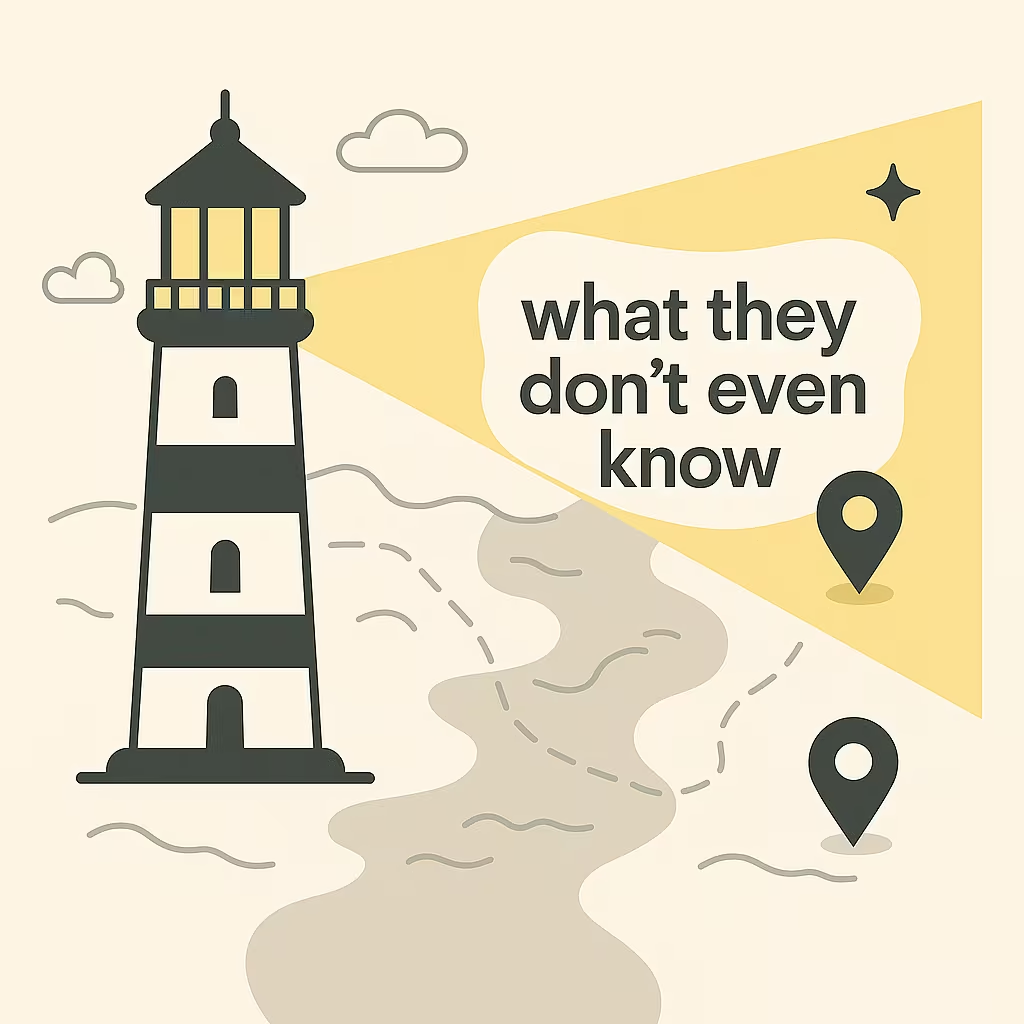
Illustration of a lighthouse shining a light on the text "what they don't even know exists," symbolizing gradual discovery in a content hub.

Learn how to create a content hub that reveals to your readers what they don’t even know exists, turning your content into a magnet for curious minds. 📘

When creating a content hub, you often encounter a double barrier: on one hand, invisibility in search engines, and on the other, difficulty sparking curiosity in potential visitors—even when they land on your site. It’s a frustrating reality: you have quality, relevant, and useful content, but no one is reading it.

In a world where thousands of free resources already flood the web, making your content hub stand out in users’ minds is a real challenge. Yet, it’s an essential step to build a sustainable audience and foster loyalty among your future readers.

This guide offers a structured, step-by-step approach to transform your content hub into a curiosity trigger, despite competition and initial invisibility.


Understanding the Double Barrier of Visibility

The first barrier to overcome is visibility: as long as your content hub doesn’t appear in search engine results, it remains invisible to most internet users. Even if your content is useful, it gets buried under the mass of already indexed resources.

The second barrier is reader curiosity: even when they stumble onto your site, visitors may not realize that you offer solutions they need. They often ignore that you cover topics that could interest or help them.

👉 These two combined barriers create an “invisibility effect” that slows down discovery and engagement.


Overcoming Invisibility in a Competitive Space

The internet is full of free and diverse content: blogs, tutorials, videos, forums… Your potential visitors have plenty of choices—often before even arriving at your content hub.

To stand out in this context, you need to:

✅ Identify your differentiating topics and work with precise keywords.

✅ Provide clear, useful, and structured content that meets specific needs.

✅ Pay attention to editorial and technical quality to ensure good SEO.

By focusing on well-targeted articles and explicit titles, you increase your chances of capturing attention and standing out.


Building a Content Hub That Sparks Curiosity

A content hub is not an exhaustive manual: it’s a tool to awaken visitors’ curiosity and encourage them to explore further.

To achieve this:

✅ Write short, targeted articles on specific topics.

✅ Highlight problems that your readers might not have thought to search for.

✅ Include contextual links to more detailed resources (tutorials, in-depth guides, FAQs).

💡 The goal is to plant seeds of curiosity that will grow as your readers’ needs and searches evolve.


Structuring Your Content to Maximize Discovery

Structuring your articles is key to helping visitors navigate through your content hub.

✅ Categorize your content with clear, explicit industry labels.

✅ Create relevant internal links to connect topics together.

✅ Add a featured image, excerpts, and links to complementary resources.

👉 This organization makes reading easier and naturally guides your visitors to topics they might not have thought to explore.


Diversifying Formats to Capture Attention

Offering different editorial formats strengthens your documentation’s ability to reach various types of visitors.

✅ Include concise articles for quick answers.

✅ Add bullet point lists or checklists for practical needs.

✅ Incorporate explanatory videos or clear diagrams for more complex topics.

💡 The variety of formats increases the chances of engaging your audience and encouraging discovery.


Measuring and Adjusting Your Content Strategy

Once your content hub is online, it’s crucial to measure its impact and continuously improve it.

✅ Analyze consultation statistics and the most common search queries.

✅ Identify articles that generate the most engagement (clicks, shares, reading time).

✅ Add regular updates to keep your content fresh and relevant.

👉 This monitoring allows you to refine your editorial strategy and strengthen your content’s visibility in search engines.


🌀 How to Help Your Future Readers Discover What They Don’t Even Know Exists? Stay Patient and Persistent

Helping your future readers discover what they don’t even know exists is a long-term process, but essential for establishing your editorial authority. Each published article contributes to building a rich and credible content hub.

🎯 Patience and consistency are essential: over time, your content will reach a critical mass that covers enough topics for your visitors to find relevant answers. This point of balance transforms your content hub into a magnet for curious readers, encouraging them to return and explore further.

💡 Stay consistent in your efforts, even if the return on investment takes time: each contribution is one more building block towards a recognized and valuable content hub.

💡 Did this article speak to you, make you think, or make you want to go further?

You might be wondering:

  • Can I create a website that reflects who I am, without relying on a closed tool?
  • Can I learn to publish, structure, and organize my content myself?
  • Am I ready to dedicate time to it?

If the answer is yes, then you’re in the right place.

Creating a useful and sustainable website does take some time — but it’s time well invested, to learn how to do things with clarity and method.

That’s exactly the goal of WPDistrib:

save time right from the start,
→ with an already optimized WordPress,
→ and free resources to learn how to use it well.


  • 👉 Want to start with an enhanced, lightweight, already optimized WordPress? I download WPDistrib
  • Prefer to learn and understand before you dive in?👉 I explore the documentation base
  • 👉 Want to go further and structure a site around a profession or a passion? I discover the method
Illustration of a lighthouse shining a light on the text "what they don't even know exists," symbolizing gradual discovery in a content hub.
🟡 Iteration 2 —
Tagged version

🏷 This article has been tagged: it now has all the basic technical elements to be properly interpreted by search engines.

This includes SEO metadata (title, description, excerpt), a featured image, and a consistent internal linking structure.

📌 This step is not yet a complete SEO optimization, but it allows the article to be shared properly on social media.
Thanks to its image, title, and excerpt, it’s ready to circulate in a content distribution logic.

, ,

Learn how to create a content hub that reveals to your readers what they don’t even know exists, turning your content into a magnet for curious minds. 📘

Beginning of the article

When creating a content hub, you often encounter a double barrier: on one hand, invisibility in search engines, and on the other, difficulty sparking curiosity in potential visitors—even when they land on your site. It’s a frustrating reality: you have quality, relevant, and useful content, but no one is reading it.

In a world where thousands of free resources already flood the web, making your content hub stand out in users’ minds is a real challenge. Yet, it’s an essential step to build a sustainable audience and foster loyalty among your future readers.

This guide offers a structured, step-by-step approach to transform your content hub into a curiosity trigger, despite competition and initial invisibility.


Understanding the Double Barrier of Visibility

The first barrier to overcome is visibility: as long as your content hub doesn’t appear in search engine results, it remains invisible to most internet users. Even if your content is useful, it gets buried under the mass of already indexed resources.

The second barrier is reader curiosity: even when they stumble onto your site, visitors may not realize that you offer solutions they need. They often ignore that you cover topics that could interest or help them.

👉 These two combined barriers create an “invisibility effect” that slows down discovery and engagement.


Overcoming Invisibility in a Competitive Space

The internet is full of free and diverse content: blogs, tutorials, videos, forums… Your potential visitors have plenty of choices—often before even arriving at your content hub.

To stand out in this context, you need to:

✅ Identify your differentiating topics and work with precise keywords.

✅ Provide clear, useful, and structured content that meets specific needs.

✅ Pay attention to editorial and technical quality to ensure good SEO.

By focusing on well-targeted articles and explicit titles, you increase your chances of capturing attention and standing out.


Building a Content Hub That Sparks Curiosity

A content hub is not an exhaustive manual: it’s a tool to awaken visitors’ curiosity and encourage them to explore further.

To achieve this:

✅ Write short, targeted articles on specific topics.

✅ Highlight problems that your readers might not have thought to search for.

✅ Include contextual links to more detailed resources (tutorials, in-depth guides, FAQs).

💡 The goal is to plant seeds of curiosity that will grow as your readers’ needs and searches evolve.


Structuring Your Content to Maximize Discovery

Structuring your articles is key to helping visitors navigate through your content hub.

✅ Categorize your content with clear, explicit industry labels.

✅ Create relevant internal links to connect topics together.

✅ Add a featured image, excerpts, and links to complementary resources.

👉 This organization makes reading easier and naturally guides your visitors to topics they might not have thought to explore.


Diversifying Formats to Capture Attention

Offering different editorial formats strengthens your documentation’s ability to reach various types of visitors.

✅ Include concise articles for quick answers.

✅ Add bullet point lists or checklists for practical needs.

✅ Incorporate explanatory videos or clear diagrams for more complex topics.

💡 The variety of formats increases the chances of engaging your audience and encouraging discovery.


Measuring and Adjusting Your Content Strategy

Once your content hub is online, it’s crucial to measure its impact and continuously improve it.

✅ Analyze consultation statistics and the most common search queries.

✅ Identify articles that generate the most engagement (clicks, shares, reading time).

✅ Add regular updates to keep your content fresh and relevant.

👉 This monitoring allows you to refine your editorial strategy and strengthen your content’s visibility in search engines.


🌀 How to Help Your Future Readers Discover What They Don’t Even Know Exists? Stay Patient and Persistent

Helping your future readers discover what they don’t even know exists is a long-term process, but essential for establishing your editorial authority. Each published article contributes to building a rich and credible content hub.

🎯 Patience and consistency are essential: over time, your content will reach a critical mass that covers enough topics for your visitors to find relevant answers. This point of balance transforms your content hub into a magnet for curious readers, encouraging them to return and explore further.

💡 Stay consistent in your efforts, even if the return on investment takes time: each contribution is one more building block towards a recognized and valuable content hub.

End of the article

💡 Did this article speak to you, make you think, or make you want to go further?

You might be wondering:

  • Can I create a website that reflects who I am, without relying on a closed tool?
  • Can I learn to publish, structure, and organize my content myself?
  • Am I ready to dedicate time to it?

If the answer is yes, then you’re in the right place.

Creating a useful and sustainable website does take some time — but it’s time well invested, to learn how to do things with clarity and method.

That’s exactly the goal of WPDistrib:

save time right from the start,
→ with an already optimized WordPress,
→ and free resources to learn how to use it well.


  • 👉 Want to start with an enhanced, lightweight, already optimized WordPress? I download WPDistrib
  • Prefer to learn and understand before you dive in?👉 I explore the documentation base
  • 👉 Want to go further and structure a site around a profession or a passion? I discover the method